
FROM A LAUNDRY TUB TO OUR TABLES: THE STRANGE ORIGIN OF THE MOKA POT
- 0
- 24-09-2026
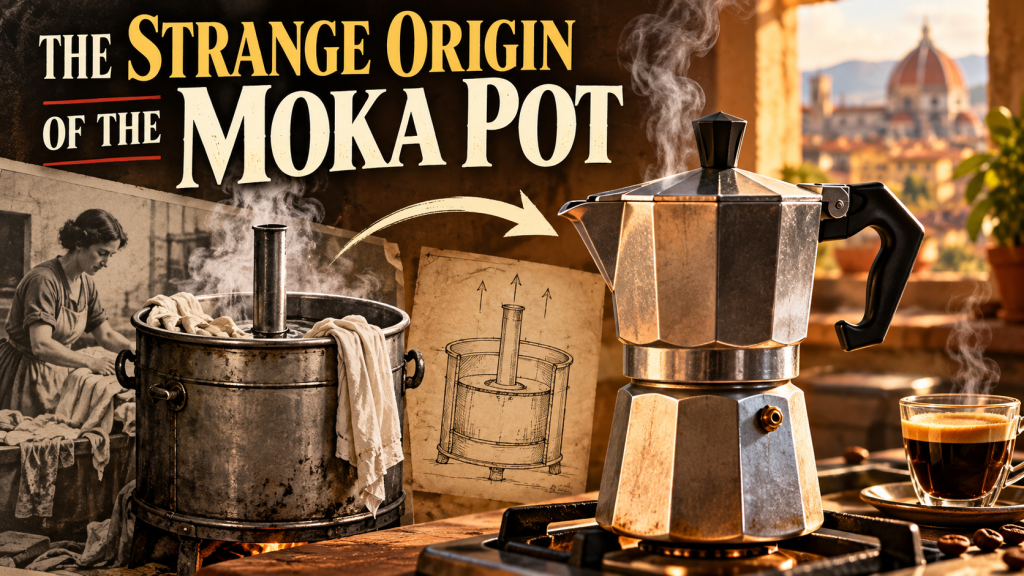
Did you know that the classic octagonal "Moka Pot," a favorite of coffee lovers in every home and office today, was actually inspired by the mechanism of an old laundry boiler? Here is the surprising story of this ingenious invention that brought Italian coffee from cafes right into our kitchens:
In the early 1930s in Italy, women washed clothes in a special boiler called a "lisciveuse." In the middle of this boiler, there was a hollow upward-extending pipe: as the water at the bottom heated up, the resulting steam pressure pushed the boiling water up through the pipe, spraying it like soapy foam over the laundry from above.
Italian engineer Alfonso Bialetti, while watching his wife do the laundry, thought to himself: "If water can rise up through a pipe with pressure and clean fabric, can't it brew a perfect espresso by passing through coffee grounds using the exact same method?"
He adapted this simple physics principle for the kitchen: as the water in the bottom chamber boiled, steam pressure pushed the water upward, and the boiling water passing through the coffee filter turned into pure, rich espresso in the top vessel.
At that time, drinking espresso required going to cafes because coffee machines were massive, bronze-plated monsters found only in upscale restaurants. Bialetti utilized aluminum, a metal that was just starting to become popular back then. This was because aluminum distributed heat instantly and evenly, was inexpensive, and retained coffee oils to brew a tastier coffee every single time. The octagonal art-deco design wasn't a coincidence, either—it was crafted this way so the device wouldn't slip from wet and hot hands while being held.
The person who turned the invention into a global brand was Alfonso's son, Renato Bialetti. He created the famous "little man with a mustache" logo, which became the symbol of the company, and introduced the device to the entire world. Passing away at the age of 93 in 2016, Renato left behind an incredible final wish during his lifetime: "Bury me inside the beloved appliance I dedicated my life to!" His family fulfilled his wish—after his cremation, his ashes were placed inside a giant Moka Pot and laid to rest in the family cemetery following a church ceremony.
Today, with over 300 million units sold worldwide and a design that has remained virtually unchanged for 90 years, the Moka Pot has written itself into domestic history as the most elegant discovery born out of a bucket of dirty laundry.