
THE MIRACULOUS HISTORY OF THE BLENDER
- 0
- 17-09-2026
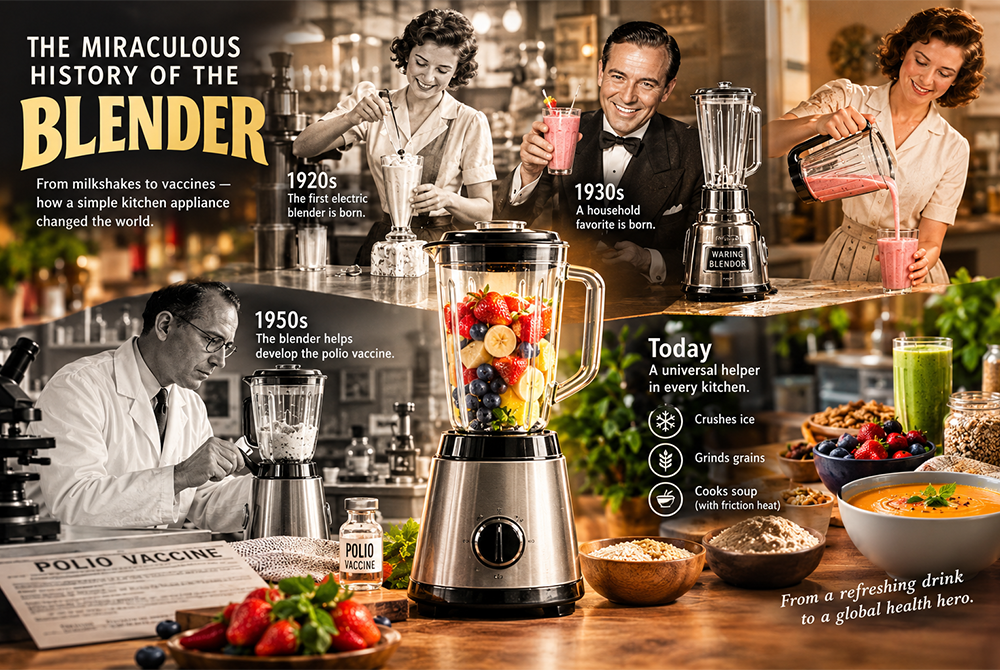
Did you know that the blender we use today to make smoothies, sauces, or soups actually played a decisive role in creating the vaccine that eradicated polio? Here is the astonishing story of how a simple cocktail mixer turned into a laboratory revolution:
In the 1920s, "soda fountains" and thick milkshakes were incredibly popular in the USA. However, mixing thick syrups and powders with milk by hand was both time-consuming and left unpleasant lumps in the drink. In 1922, Polish-American inventor Stephen Poplawski introduced a completely new engineering approach: instead of inserting the mixing paddle from above, he placed rotating sharp blades directly at the bottom of the container. These small motor-driven blades at the base of the jar pulled the liquid into a powerful vortex, turning thick ingredients into a purée in seconds. This was the first electric blender in history.
Poplawski's invention remained confined to cafes and bars in its early years. In the 1930s, famous musician and bandleader Fred Waring became fascinated by the device and invested heavily in developing a household version of it. Released in 1937, the "Waring Blendor" quickly became a favorite in both bars and wealthy households. People could now drink fruits without chewing them and prepare purées and sauces at the touch of a button within seconds.
The blender's greatest and most astonishing triumph took place far away from the kitchen—in a microbiology laboratory. In the 1950s, a poliomyelitis (polio) epidemic was raging worldwide, paralyzing thousands of children. Renowned physician Dr. Jonas Salk needed to break down virus tissues very evenly and finely without damaging the cells to develop a vaccine. Existing laboratory equipment could not achieve this level of precise blending. Dr. Salk brought an ordinary kitchen blender into the lab! The special angled blades at the bottom of the blender perfectly emulsified the tissues and the virus. It was with the help of this kitchen appliance that the first safe polio vaccine, which saved humanity, was successfully tested, protecting the lives of millions of children.
Following the vaccine's discovery, engineers further increased the motor power of the device, turning it into a modern universal helper capable of crushing ice, grinding grains into flour, and even cooking hot soup through friction heat. A simple kitchen blade invented to make a refreshing drink is considered today both an integral part of our culinary arts and one of the strangest saviors in global health history.