
The Invention of the Dishwasher
- 0
- 27-08-2026
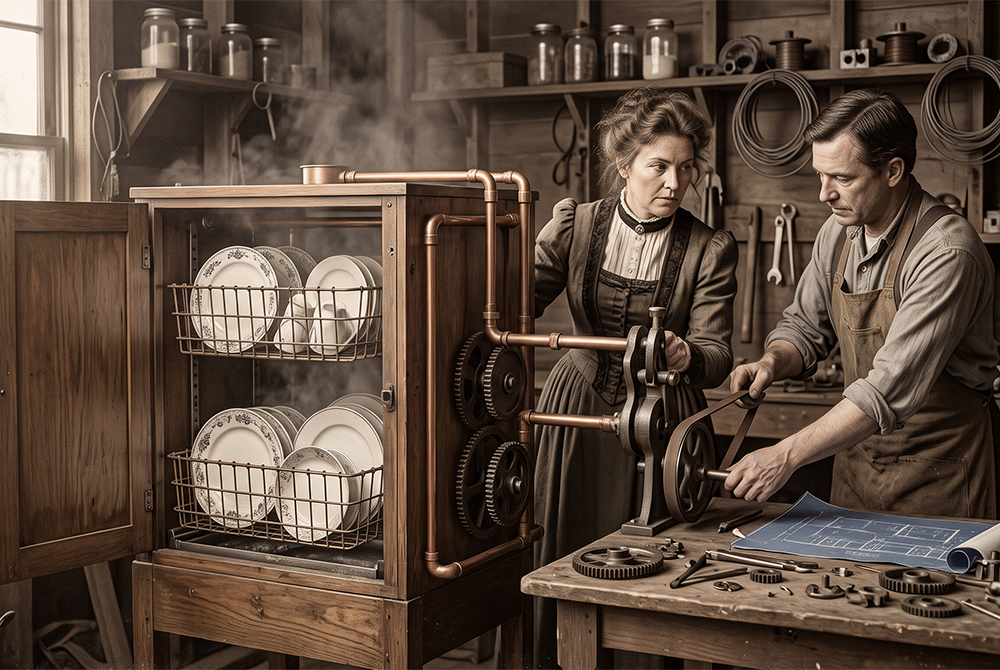
The modern dishwasher—a kitchen appliance that takes over our daily household chores—was neither born in a culinary laboratory nor developed by a massive industrial giant. Instead, it was brought into the world thanks to the anger and unwavering determination of a woman who simply grew tired of having her 17th-century porcelain dishes broken.
In the 1880s, Josephine Cochrane, a wealthy socialite living in Illinois, USA, frequently hosted magnificent dinner parties. However, after every gathering, her servants would either break or chip her cherished, expensive 17th-century family heirloom china while washing them.
To protect her dishes, Josephine began washing them herself, but she quickly grew exhausted by the tedious chore. Why had no one ever invented a machine to wash dishes? Previous unsuccessful attempts had relied on mechanical brushes to scrub the dishes, which only resulted in even more breakages. It was then that Cochrane famously declared:
"If nobody else is going to invent a dishwasher, I'll do it myself!"
With no formal engineering background, Josephine set to work in the shed behind her house:
The High-Pressure Water Revolution: Instead of scrubbing dishes, she decided to use the power of hot, soapy water under pressure.
Custom Wire Baskets: She designed special wire compartments tailored precisely to the shapes of plates, cups, and saucers.
The Mechanical Pump: The dishes remained stationary while a rotating wheel and pump at the bottom sprayed boiling soapy water directly onto them.
In December 1886, Josephine officially patented her device and, with the help of local mechanic George Batters, built the first fully working model.
Why Did It Take Decades to Enter Homes?
Although restaurants immediately adopted the invention, it took until the 1950s for dishwashers to make their way into ordinary family kitchens. This delay was driven by two main reasons:
Infrastructure Shortages: In the early 20th century, most homes lacked a continuous supply of hot water and sufficiently strong plumbing systems.
Societal Views: At the time, women's labor was considered "free," so heads of households viewed spending money on such technology as an unnecessary luxury.
It was only after World War II, alongside the modernization of water supply networks and the mass entry of women into the workforce, that dishwashers transformed into a global kitchen standard. Josephine Cochrane ultimately created not just a household appliance, but a massive industry that put an end to daily domestic servitude.