
Why Did the World's First Webcam Monitor a Coffee Pot Instead of People?
- 0
- 25-06-2026
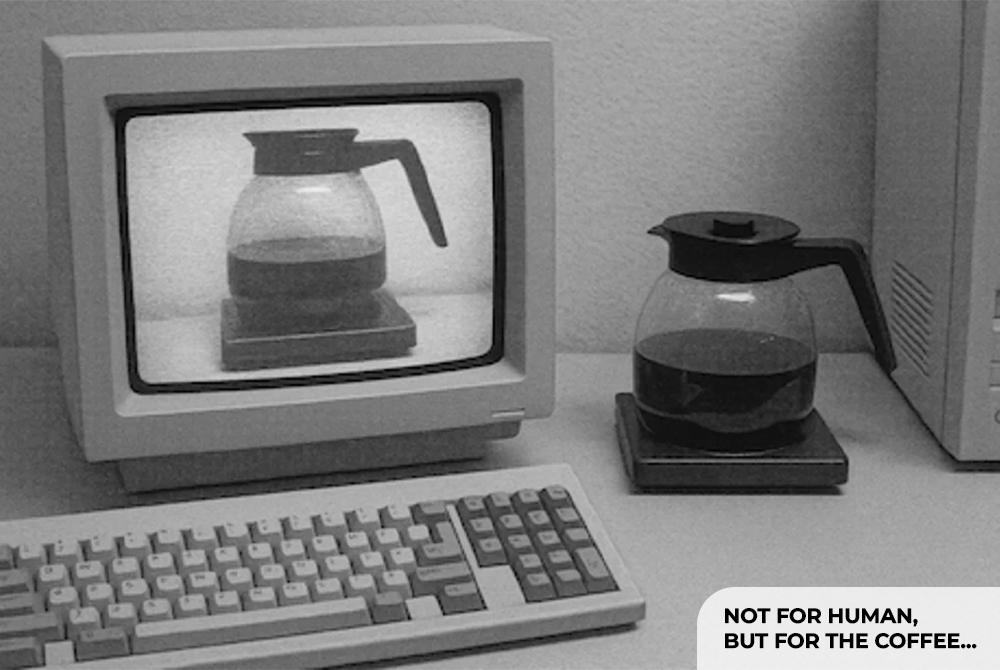
The story of the legendary "Trojan Room Coffee Pot," the world's first webcam, is one of the most intriguing and instructive tales in the history of technology. This event was not just a technological achievement; it is proof of how far human creativity, fueled by the pursuit of comfort and efficiency, can go.
In 1991, programmers at the University of Cambridge, tired of walking to the kitchen only to find the coffee pot empty, came up with a peculiar solution. They installed an old camera right in front of the coffee machine. The system captured just one grayscale frame per second and transmitted the image to the local network. This way, everyone could check if the coffee was ready on their computer screens without having to get up. In 1993, this system was connected to the global internet, becoming the world's first webcam and a phenomenon watched by people across the globe.
For the researchers working in the "Trojan Room" at the University of Cambridge, the coffee machine was a central object. However, there was a problem: the laboratory building was spread across several floors. Climbing down the stairs only to be met with an empty coffee pot caused a significant loss of energy and frustration during the academic workflow.
This was not just "laziness"; it was efficient time and energy management. By solving this small problem, programmers Quentin Stafford-Fraser and Paul Jardetzky aimed to create a system that would not disrupt their workflow. People were captivated by the magic of the internet because, at the time, seeing real-time events in another location through a screen felt like sorcery.
In conclusion: Sometimes the greatest breakthroughs in the tech world do not come from complex mathematical formulas, but from the minds of curious and slightly "lazy" people who ask, "I wonder how I can make this easier?" This small engineering solution, born out of a moment of laziness, laid the foundation for today’s AI-powered security cameras, baby monitors, and video calls. The next time you check your smart home camera from your smartphone, remember: massive digital revolutions are sometimes sparked simply by the desire to have a cup of coffee!