
The Einstein-Szilard Refrigerator: An Historical Account of Eco-Friendly Innovation
- 0
- 11-06-2026
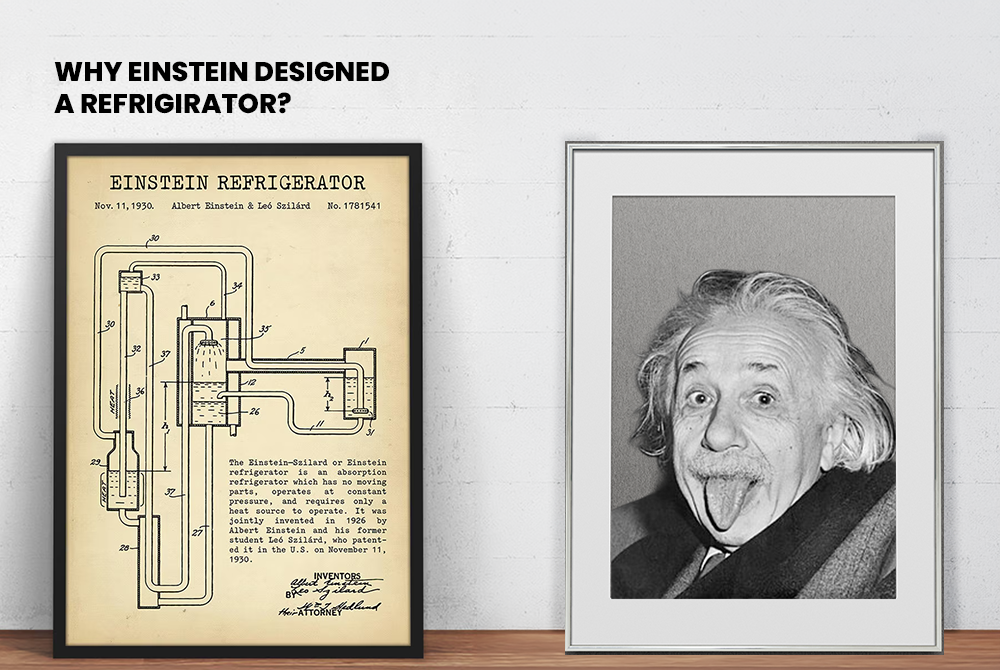
This compelling historical narrative demonstrates that the eminent physicist’s intellectual pursuits extended beyond cosmic mechanics to encompass the fundamental safety of human life. Temporarily disregarding his pioneering formulation of the Theory of Relativity, one encounters Albert Einstein in the capacity of an applied engineer.
In 1926, public discourse in Berlin was profoundly shaken by a tragic event: an entire family perished in their sleep as a consequence of inhaling toxic refrigerants—specifically methyl chloride and sulfur dioxide—leaking from their domestic cooling appliance. Profoundly affected by this catastrophe, Einstein and his exceptionally gifted student, Leo Szilard, committed to engineering an entirely secure alternative. Their objective was to eliminate any potential for gas leakage by dispensing with conventional mechanical failure points, such as reciprocating pistons and moving valves. This collaborative endeavor yielded more than 45 registered patents between 1926 and 1933.
To completely eliminate mechanical degradation and wear, the researchers conceptualized and pursued two ingenious technological pathways:
1. The Absorption Paradigm: Operating under uniform isobaric conditions (constant pressure), this thermodynamic system utilized a ternary fluid mixture of water, ammonia, and butane. Crucially, the mechanism bypassed electrical energy altogether, relying exclusively on an external thermal source, such as a localized gas flame or concentrated solar radiation
2. The Electromagnetic Pump Mechanism: To replace conventional physical pistons, the design integrated a liquid metal alloy composed of potassium and sodium (NaK). By applying a localized electromagnetic field, the conductive liquid metal was actuated to compress the refrigerant gas. Notably, this innovative fluid-propulsion technology was subsequently adapted for the cooling systems of nuclear reactors.
Factors Underlying Commercial Failure
Notwithstanding its superior safety architecture, the technological enterprise proved non-viable within the contemporary commercial marketplace due to two primary constraints:
1. Strategic Patent Suppression: In 1928, the Swedish appliance manufacturer AB Electrolux acquired the proprietary rights to these patents for a nominal sum of $750, subsequently shelving the technology to safeguard its market share and neutralize competitive risk. Of historical significance: Szilard sustained his academic livelihood through these specific royalties, which subsidized his conceptualization of the initial nuclear chain reaction—a breakthrough that fundamentally reconfigured global geopolitical history.
2. The Emergence of Halocarbons and Political Volatility: The synthesis of Freon in 1930—initially evaluated as an entirely benign chemical compound—rendered conventional compression refrigeration significantly more cost-effective to manufacture. Concurrently, the onset of the Great Depression and the subsequent ascendancy of the National Socialist regime compelled these Jewish academics to emigrate from Germany, thereby abruptly terminating all structural capital and financial support.
Contemporary Ecological Implications: The Resurgence of Einsteinian Technology
Decades later, following the scientific consensus that chlorofluorocarbons (CFCs like Freon) actively deplete the stratospheric ozone layer, Einstein’s environmentally sustainable refrigeration model experienced a significant academic renaissance. A functional prototype utilizing this foundational architecture was constructed in 2005, with subsequent technological refinements achieved at Oxford University in 2008. By engineering a fourfold increase in thermodynamic efficiency, contemporary researchers developed solar-thermal refrigeration units optimized for structurally isolated regions lacking access to centralized electrical grids. These modernized, ecologically benign apparatuses successfully maintain a stable internal thermal environment calibrated precisely between 8°C and 14°C.