
The Technological Development of Home Appliances from Past to Present: Differences Between Traditional Systems and Modern Solutions
- 0
- 07-04-2026
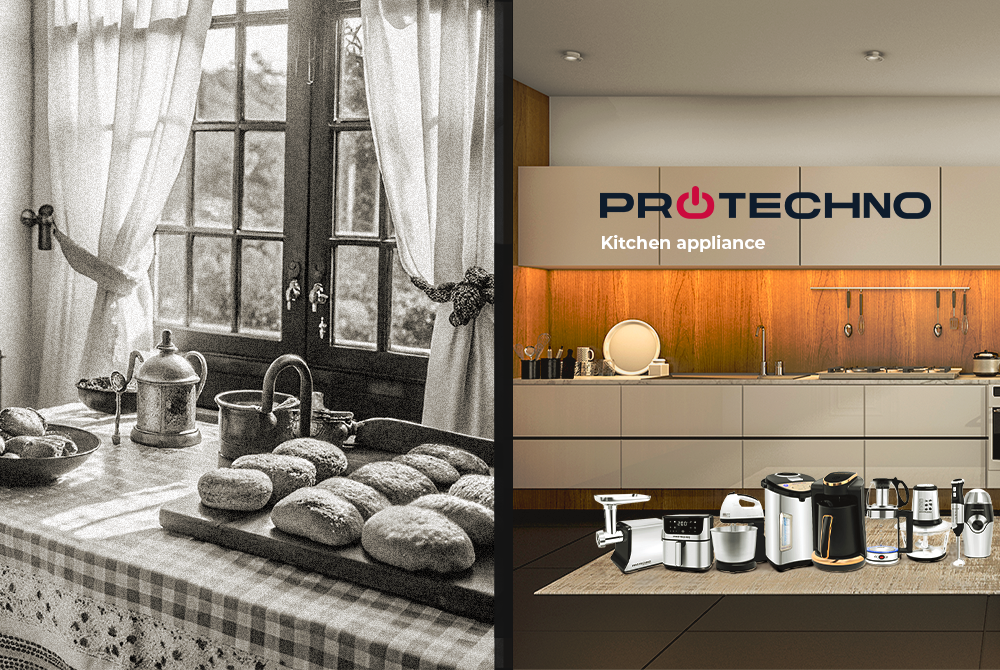
Household appliances are essential technological instruments that enhance the quality of human life. The production of household appliances, which emerged with the Industrial Revolution in the late nineteenth century, has evolved into a new phase in the twenty-first century through advancements in digitalization and the integration of the Internet of Things (IoT). Home appliances are technological tools designed to facilitate daily human life. The development of home appliances constitutes an integral part of the overall evolution of technology. To what extent has this technological evolution transformed human daily life? While functionality was the primary objective in the past, comfort, safety, and efficiency have become the main priorities today. Modern home appliances are no longer perceived merely as technical devices; rather, they are regarded as technological solutions that enhance the quality of everyday life. These transformations indicate that home appliances will continue to evolve into more personalized, intelligent, and sustainable systems in the future.
The first generation of home appliances was primarily based on mechanical and electromechanical systems. During this period, the main purpose of technology was to perform a specific function. User comfort, energy efficiency, and safety considerations were largely secondary concerns. However, can such an approach meet the expectations of contemporary users?
The main characteristics of early home appliances included:
• Single-function structures
• Large dimensions and heavy construction
• High energy consumption
• Mechanical control systems
• Limited safety mechanisms
Although these devices were considered technological advancements in their time, they proved to be inefficient in the long term from both functional and economic perspectives.
With the advancement of technology, many earlier systems have become obsolete. These include:
• Motor technologies that generated high noise levels
• Mechanisms lacking energy optimization
• Materials prone to overheating and technical failures
• Designs that did not adequately ensure user safety
As these technologies failed to meet modern requirements, they were gradually replaced by more advanced solutions.
Modern Home Appliances: User-Centered Technologies
Contemporary home appliances are designed based on user needs and represent more intelligent and efficient technological systems. The modern approach emphasizes not only functionality but also the overall user experience. How will the increasing integration of smart technologies further reshape human interaction with household devices?
The main features of modern home appliances include:
• Multifunctional and modular structures
• Energy-efficient technologies
• Ergonomic and aesthetically refined designs
• Integrated safety systems
• Compact dimensions and lightweight materials
These devices represent a clear example of technology adapting to human life, rather than humans adapting to technology.
In summary, while traditional appliances generally operate through manual control panels, modern devices provide significantly greater flexibility through digital interfaces and remote access capabilities. In contemporary household appliances, energy consumption has been substantially reduced owing to efficiency-oriented designs and standardized energy classification systems. Smart sensors prevent unnecessary operation, thereby minimizing resource waste. Whereas traditional devices perform functions strictly according to user-defined inputs, the automation capabilities of modern appliances enable them to learn user behavior and propose optimal operational processes. Modern solutions have transformed user expectations by offering considerable time savings in domestic life. Will future household appliances evolve into fully autonomous systems requiring minimal human intervention? Smart home systems promote consumption habits centered on comfort and efficiency. Furthermore, modern household appliances aim to reduce environmental impact through designs that comply with energy efficiency standards, while the use of recyclable materials and long-lasting designs provides additional advantages in terms of sustainability.